1Season Chicken Cutlets
Season chicken cutlets on both sides with Italian seasoning, kosher salt, and black pepper.
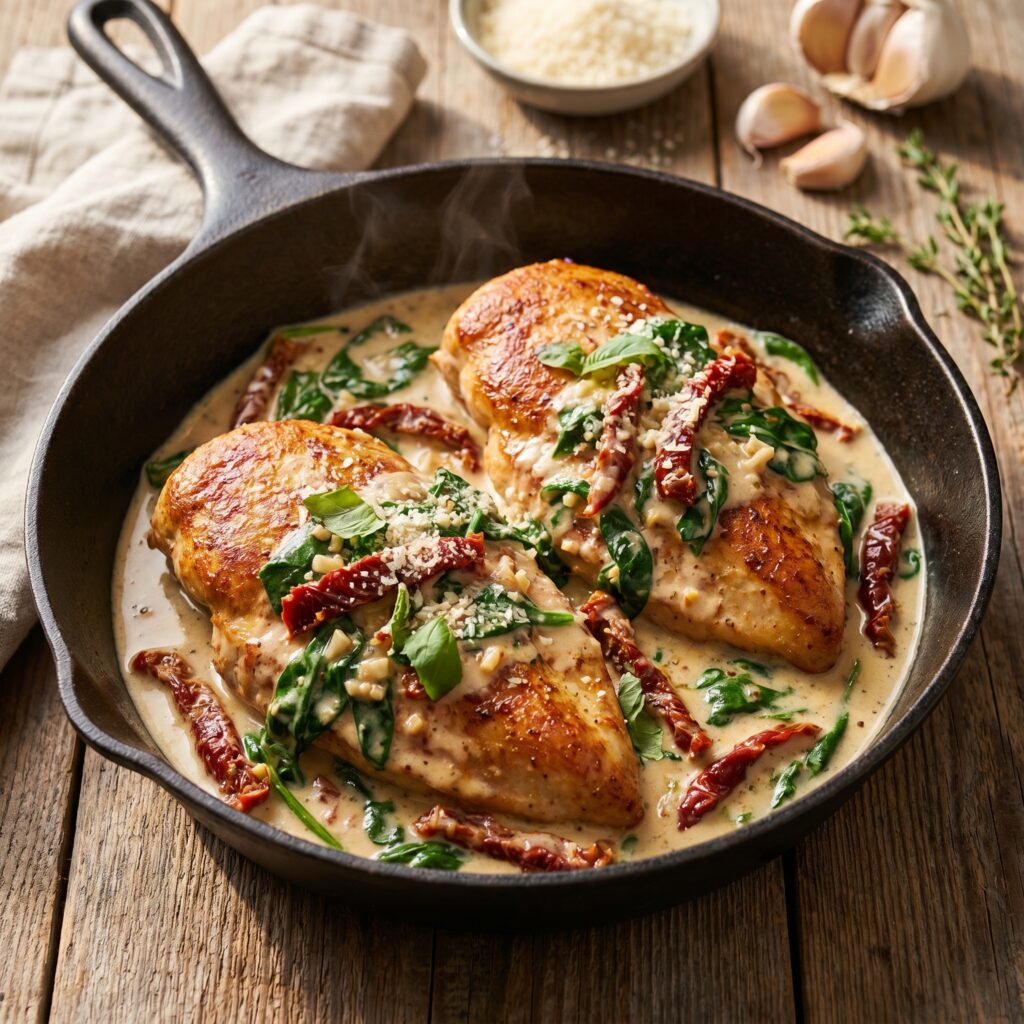
Golden pan seared chicken breast cutlets simmered in a luscious garlic cream sauce loaded with tangy sun dried tomatoes, baby spinach, and aged parmesan.
Quick Look
| Recipe | Tuscan Garlic Chicken in Creamy Sun Dried Tomato Spinach Sauce |
Get new recipes
Got chicken? Never wonder what’s for dinner again.
Golden pan seared chicken breast cutlets simmered in a luscious garlic cream sauce loaded with tangy sun dried tomatoes, baby spinach, and aged parmesan.
Wondering how to make an elegant, restaurant quality Italian dinner in one skillet in less than thirty minutes? You have come to the right place. This Tuscan garlic chicken unites golden seared cutlets with a velvety sun dried tomato and spinach cream sauce.
Rich dairy cream sauces can taste cloying if they lack acidity. Sun dried tomatoes contain concentrated malic and citric acids and natural glutamates. Simmering them alongside fresh garlic and heavy cream cuts through dairy richness, providing bright, savory balance. The natural pectin in the dried tomatoes helps stabilize the heavy cream, keeping the sauce velvety and preventing separation.
Here is what you need to make this recipe for tuscan garlic chicken in creamy sun dried tomato spinach sauce:
Thin Chicken Cutlets: Sear golden in minutes while keeping interior meat succulent and juicy.
Sun Dried Tomatoes in Oil: Packed with sweet, tangy acidity and savory herbs that flavor the sauce.
Heavy Cream and Bone Broth: Simmers into a luxurious, velvety sauce that blankets the chicken.
Fresh Baby Spinach and Parmesan: Vibrant greens add freshness while sharp aged cheese enriches the sauce.
Serve over al dente fettuccine pasta, creamy mashed potatoes, or alongside warm crusty garlic bread to soak up the sauce.
Store leftover Tuscan chicken in an airtight container in the refrigerator for up to 4 days. Warm gently in a skillet over medium low heat with a splash of milk or chicken broth to maintain sauce creaminess.
Mastering Tuscan Garlic Chicken with Sun Dried Tomatoes comes down to precise temperature control and key technique cues.
Season chicken cutlets on both sides with Italian seasoning, kosher salt, and black pepper.
Heat two tablespoons of the reserved sun dried tomato oil in a large heavy skillet over medium high heat. Sear chicken cutlets for 3 to 4 minutes per side until golden brown and center registers 160°F. Transfer chicken to a clean plate.
Lower skillet heat to medium. Add sliced sun dried tomatoes and minced garlic, sautéing for 1 minute until fragrant.
Pour in chicken bone broth and heavy cream, scraping up any browned bits from the pan floor. Simmer for 3 to 4 minutes until sauce thickens slightly. Stir in grated parmesan cheese until melted.
Add baby spinach to the bubbling sauce, stirring for 1 to 2 minutes until wilted. Return cooked chicken cutlets and resting juices to the skillet, spooning luscious sauce over the meat. Simmer 1 minute until piping hot (165°F) and serve.
Appears in:
Every recipe on Chickeeen relies on these four core culinary physics principles. Use our tested reference cards before you start cooking.
Exact target internal pull temperatures by cut to lock in maximum moisture.
Retain up to 40% more natural juices with proper carryover heat resting.
Dry brining science and salt penetration window for deeply seasoned poultry.
The baking powder secret, high heat Maillard reaction, and fat rendering rules.
Boneless chicken thighs can replace breasts. Baby kale can substitute for spinach.
Store leftover Tuscan chicken in an airtight container in the refrigerator for up to 4 days.
Sauce can be made 2 days ahead without the spinach. Add spinach only when reheating to serve.
Warm gently in a skillet over medium low heat with a splash of milk or chicken broth to maintain sauce creaminess.
Technique Guides