1Velvet Chicken and Prep Sauce
In a small bowl, toss sliced chicken with cornstarch, soy sauce, and 1 tsp oil. Let sit for 10 minutes. In another bowl, whisk low sodium soy sauce, dark soy sauce, oyster sauce, sesame oil, and sugar.
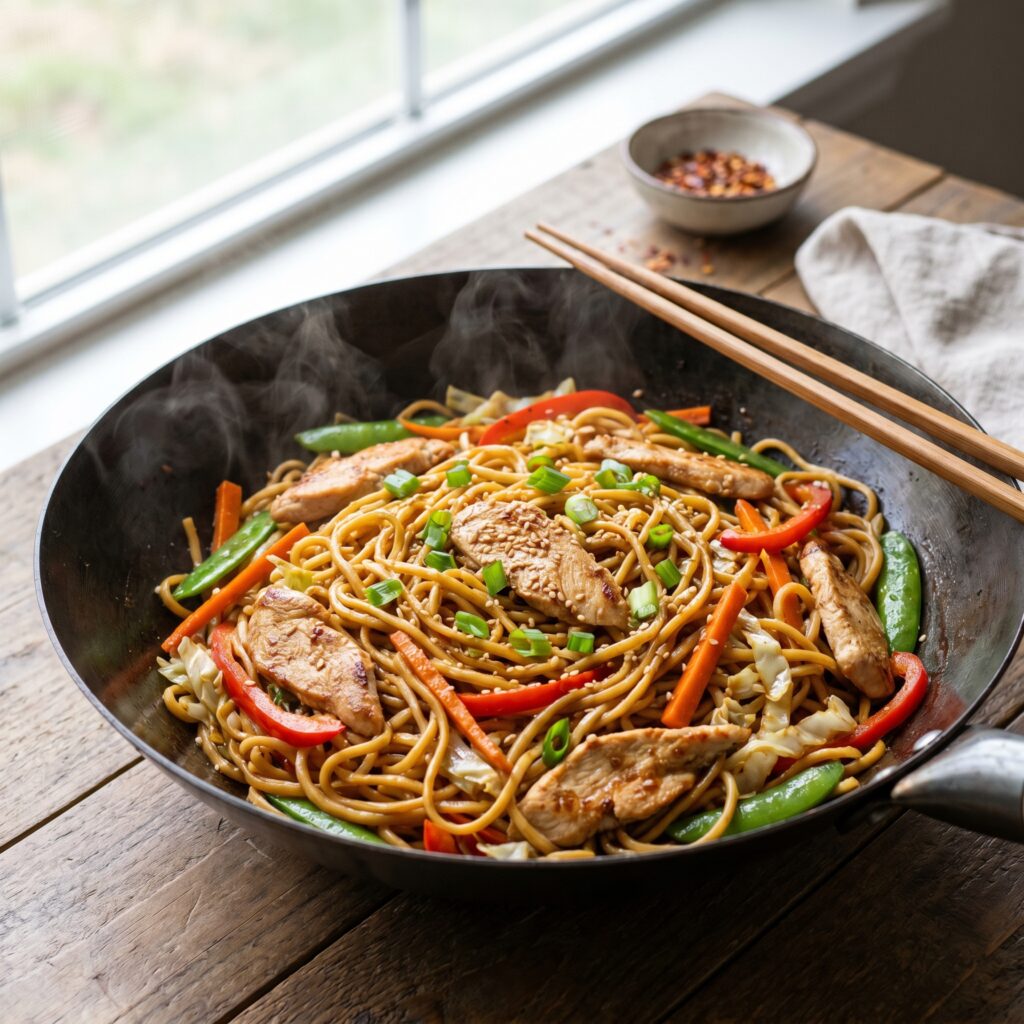
Tender velveted chicken breast slices, springy egg noodles, and crisp vegetables tossed in a savory garlic soy lo mein sauce in just fifteen minutes.
Quick Look
| Recipe | Takeout Style Chicken Lo Mein (Savory Egg Noodles in 15 Minutes) |
Get new recipes
Got chicken? Never wonder what’s for dinner again.
Tender velveted chicken breast slices, springy egg noodles, and crisp vegetables tossed in a savory garlic soy lo mein sauce in just fifteen minutes.
Wondering how to make authentic takeout style chicken lo mein at home in less time than food delivery takes to arrive? You have come to the right place. With springy egg noodles, tender chicken, and crisp vegetables in savory sauce, this wok dinner is pure comfort.
Thin chicken breast slices easily turn tough in a hot wok. Coating the sliced meat in cornstarch and soy sauce creates a protective starch barrier that seals in juices. In a scorching hot skillet, dark soy sauce and oyster sauce caramelize around the springy egg noodles and chicken, creating authentic takeout gloss and deep umami depth.
Here is what you need to make this recipe for takeout style chicken lo mein:
Chinese Egg Noodles: Springy wheat noodles that trap the savory garlic soy sauce in every bite.
Velveted Chicken Breast: Thinly sliced across the grain and coated in cornstarch so it stays juicy under high wok heat.
Dark and Light Soy Sauces: Light soy brings salty umami while dark soy imparts rich mahogany color.
Crisp Cabbage and Carrots: Provide refreshing textural contrast to the tender noodles and meat.
Serve with crispy vegetable spring rolls, steamed pork dumplings, and hot and sour soup.
Store leftovers in an airtight container in the refrigerator for up to 4 days. Warm in a hot skillet with two tablespoons of water over high heat for 2 minutes to restore noodle bounce.
Mastering Takeout Style Chicken Lo Mein comes down to precise temperature control and key technique cues.
In a small bowl, toss sliced chicken with cornstarch, soy sauce, and 1 tsp oil. Let sit for 10 minutes. In another bowl, whisk low sodium soy sauce, dark soy sauce, oyster sauce, sesame oil, and sugar.
Cook egg noodles in a large pot of boiling water for 3 to 4 minutes until al dente. Drain, rinse briefly with cold water, and toss with a few drops of sesame oil to prevent sticking.
Heat one tablespoon cooking oil in a wok or large heavy skillet over high heat. Add velveted chicken in a single layer and sear for 2 minutes. Stir fry for 2 minutes longer until cooked to 165°F. Remove to a plate.
Add remaining tablespoon oil to the hot wok. Add shredded cabbage, carrots, and white parts of green onions. Stir fry for 2 minutes until tender crisp. Add minced garlic, tossing for 30 seconds.
Dump cooked egg noodles, cooked chicken, and prepared lo mein sauce into the wok. Toss vigorously over high heat for 2 minutes until noodles absorb the savory sauce and turn glossy dark amber. Fold in green onion tops and serve immediately.
Appears in:
Every recipe on Chickeeen relies on these four core culinary physics principles. Use our tested reference cards before you start cooking.
Exact target internal pull temperatures by cut to lock in maximum moisture.
Retain up to 40% more natural juices with proper carryover heat resting.
Dry brining science and salt penetration window for deeply seasoned poultry.
The baking powder secret, high heat Maillard reaction, and fat rendering rules.
Boneless chicken thighs work great. Sliced mushrooms, snow peas, or bell peppers can be added to the wok.
Store leftovers in an airtight container in the refrigerator for up to 4 days.
Velvet the chicken up to 24 hours ahead and store in the fridge unrinsed. Rinse just before cooking. Parboil noodles day of serving only.
Warm in a hot skillet with two tablespoons of water over high heat for 2 minutes to restore noodle bounce.
Technique Guides