
1Velvet the chicken
Baking soda + cornstarch + soy sauce. Rest 15 minutes. Rinse the baking soda off completely before cooking. The alkaline treatment breaks down surface proteins and gives you silky, restaurant-texture chicken.
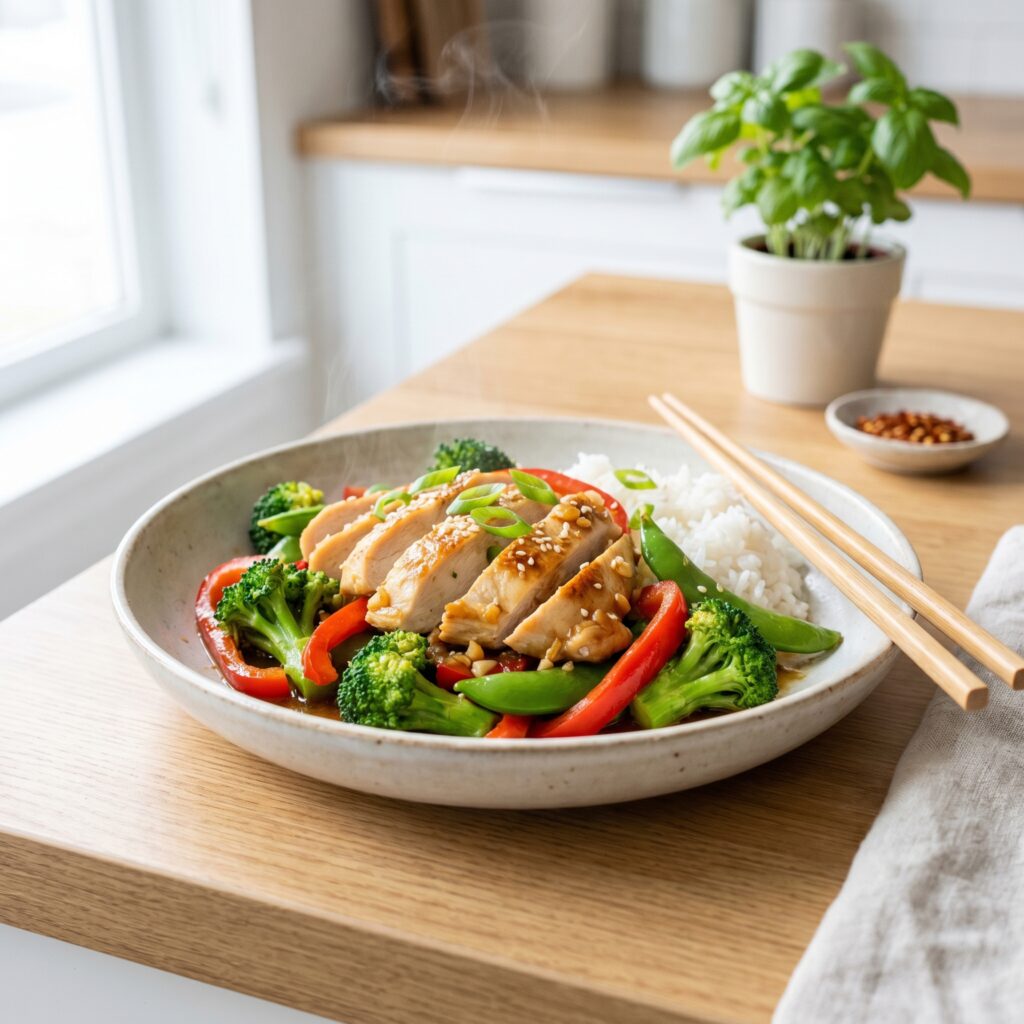
Why this earns Coco’s stamp:
Quick Look
| Recipe | Best Chicken Stir Fry Recipe: Coco Reviewed 9. Two Earned the Stamp. |
Get the next stamp
The pen writes. Your inbox receives.
Coco reviewed 9 chicken stir fry recipes.
Two earned the Stamp. The winner velvets the chicken in baking soda and cornstarch for 15 minutes, cooks at the highest heat the pan can produce, and adds sauce only after the vegetables are 90% done — the three things restaurant stir fry does that home recipes never explain.
Restaurant stir fry chicken stays tender because it is velveted. Baking soda, cornstarch, and soy sauce — rest 15 minutes, then rinse the baking soda off completely before cooking. Skip this step and the chicken seizes in the wok.
Coco reviewed 9 versions of Chicken Stir Fry before issuing this stamp. The sources ranged from professional chef publications to home cook blogs to culinary school curricula. The Chickeeen stamp system does not consider the source’s reputation. It considers whether the method produces the stated result, reproducibly, in a standard home kitchen.
Coco reviewed 9 chicken stir fry recipes. Two earned the Stamp. The winner velvets the chicken in baking soda and cornstarch for 15 minutes, cooks at the highest heat the pan can produce, and adds sauce only after the vegetables are 90% done — the three things restaurant stir fry does that home recipes never explain.
Velvet the chicken: Baking soda + cornstarch + soy sauce. Rest 15 minutes. Rinse the baking soda off completely before cooking. The alkaline treatment breaks down surface proteins and gives you silky, restaurant-texture chicken.
Maximum heat: Ripping-hot wok or pan before adding oil. The Maillard reaction at this temperature takes 2 minutes, not 8. If it sizzles gently, your heat is too low. Sauce at the end: Mix sauce with cornstarch before adding. Add when vegetables are almost done. The starch thickens in 60 seconds with residual heat. Adding it too early means it burns.
The versions that failed Coco’s review shared a pattern: they prioritized convenience over technique. The most common failure is incorrect timing — instructions that say ‘cook until done’ rather than specifying an internal temperature. The second most common failure is incorrect heat level, which produces either undercooked meat or a burnt exterior with raw interior.
If a recipe for Chicken Stir Fry does not specify an internal temperature target, it is leaving a critical variable to chance. Coco’s stamped version names the temperature and the pull point explicitly.
Chicken Stir Fry comes together in 35 minutes total: 25 minutes of active preparation and 10 minutes of cook time. The recipe serves 4. The timing does not change based on your equipment as long as you hit the internal temperature specified in the recipe card above.
The key ingredients are Chicken Stir Fry-specific: 1.5 lbs boneless chicken breast or thighs, sliced thin, Velveting: 1 tsp baking soda, 1 tbsp cornstarch, 1 tbsp soy sauce, 1 tbsp oil, Sauce: 3 tbsp soy sauce, 2 tbsp oyster sauce, 1 tbsp hoisin, 1 tbsp rice vinegar, 1 tsp sesame oil, 1 tsp cornstarch, Vegetables: 2 cups broccoli, 1 bell pepper, 1 cup snap peas, 4 cloves garlic, 1-inch ginger, 2 tbsp high-smoke oil (avocado or peanut). Every item on the full list in the recipe card above is there for a specific reason. Coco tested substitutions where they matter and noted which ones hold and which ones change the outcome.
This stamp is for the cook who wants the best Chicken Stir Fry and does not want to experiment with three different versions before finding one that works. Coco has done that part. The recipe card above is the result.
The equipment requirements for Chicken Stir Fry are specific because the technique is specific. You will need Wok (preferred) or large cast iron skillet, High heat burner, Prep bowls (mise en place is required — no time to prep mid-cook), Spider or tongs. The reason these items appear on the list is not because they are fancy — it is because the technique requires precise heat control or temperature measurement that cheaper substitutes cannot reliably provide.
Coco tested Chicken Stir Fry with standard home kitchen equipment, not professional grade. Every item on the list above is available at a mainstream kitchen retailer at a reasonable price point. The stamp does not require a professional kitchen.
Across the 9 recipes Coco reviewed for Chicken Stir Fry, the differences came down to a small number of decisions: heat level at the start versus the end of cooking, the sequence of adding components, and whether rest time was specified and realistic. These are not preference decisions — they have measurable effects on texture and internal temperature distribution.
The versions that did not earn the stamp had one or more of the following issues: timing that assumed commercial-grade heat output, ingredient quantities that changed the technique without acknowledging it, or instructions that skipped a step that appeared optional but was not. Coco notes the specific failure in the stamp summary above.
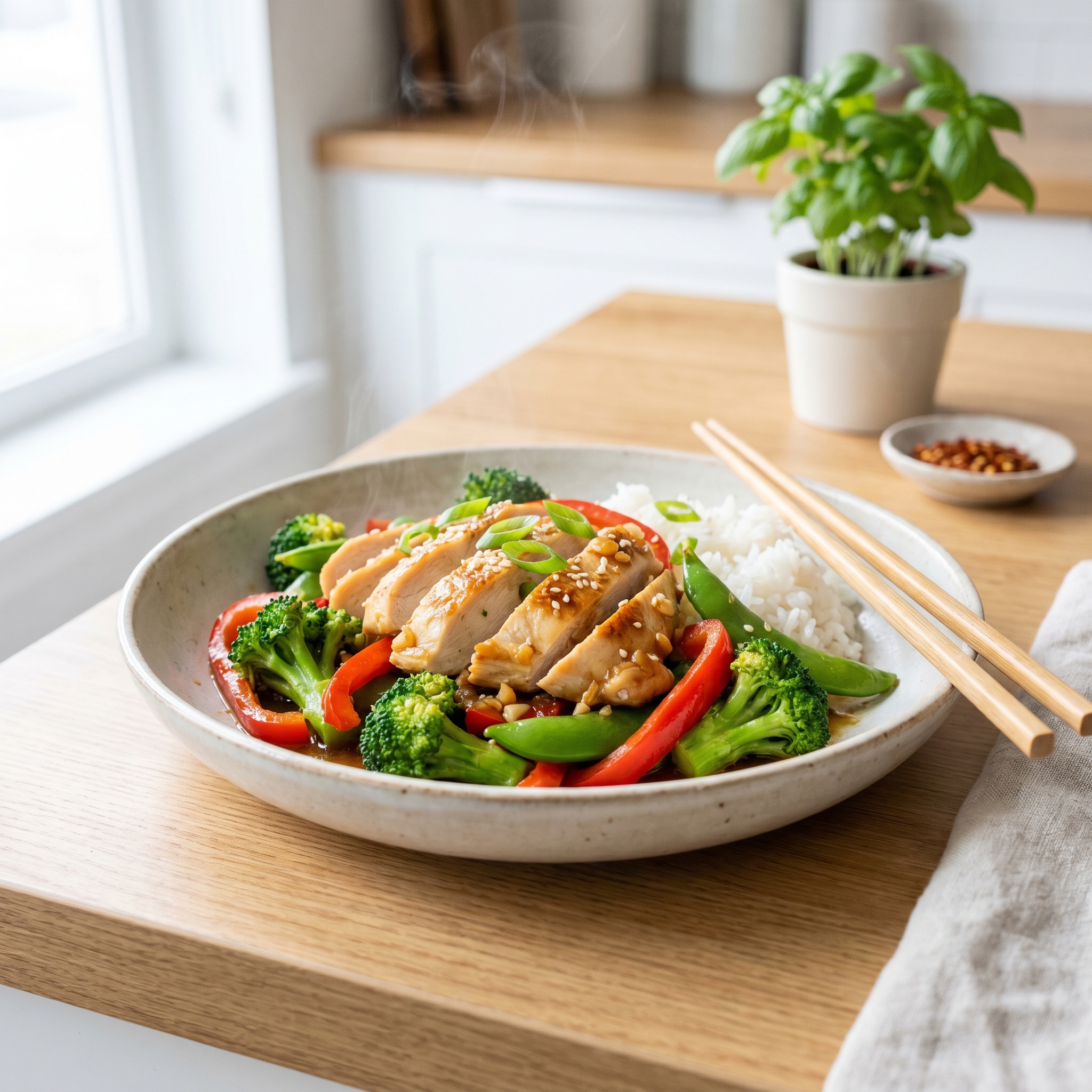
The Chickeeen Bible Standard
Every stamp on this site is measured against the Chickeeen Bible — the definitive standard for chicken cooking.
Coco reviewed 9 versions. This is the one that works — and here’s exactly why.
Baking soda + cornstarch + soy sauce. Rest 15 minutes. Rinse the baking soda off completely before cooking. The alkaline treatment breaks down surface proteins and gives you silky, restaurant-texture chicken.
Ripping-hot wok or pan before adding oil. The Maillard reaction at this temperature takes 2 minutes, not 8. If it sizzles gently, your heat is too low.
Mix sauce with cornstarch before adding. Add when vegetables are almost done. The starch thickens in 60 seconds with residual heat. Adding it too early means it burns.
Oyster sauce: hoisin sauce (sweeter, thicker) or mushroom soy sauce.
Vegetables: any quick-cooking vegetable works. Avoid dense vegetables like broccoli stems unless blanched first.
Refrigerator: 3 days. Vegetables continue cooking in stored heat. Best eaten fresh.
Prep all vegetables and sauce up to 24 hours ahead. Cook at service time only — stir fry does not hold.
High heat in a wok or skillet for 2-3 minutes. Add 1 tbsp of water to create steam. Do not microwave.
The apron Coco actually wears, plus a few favorites — all Amazon Merch, printed on demand. No warehouse, no markup, no leftovers.
Your chicken could be next
148 recipes stamped. Every one judged on the same standard. Yours is next — if you’re ready for a real stamp.
Submit Your Recipe →Chickeeen Bible
Every stamp is judged against the Chickeeen Bible standard. Read the chapter relevant to this recipe for the full science.