
1Cold water start
Cover chicken with cold water, never hot. Slow temperature rise extracts proteins and collagen gradually. Starting with hot water seizes proteins and clouds the broth.
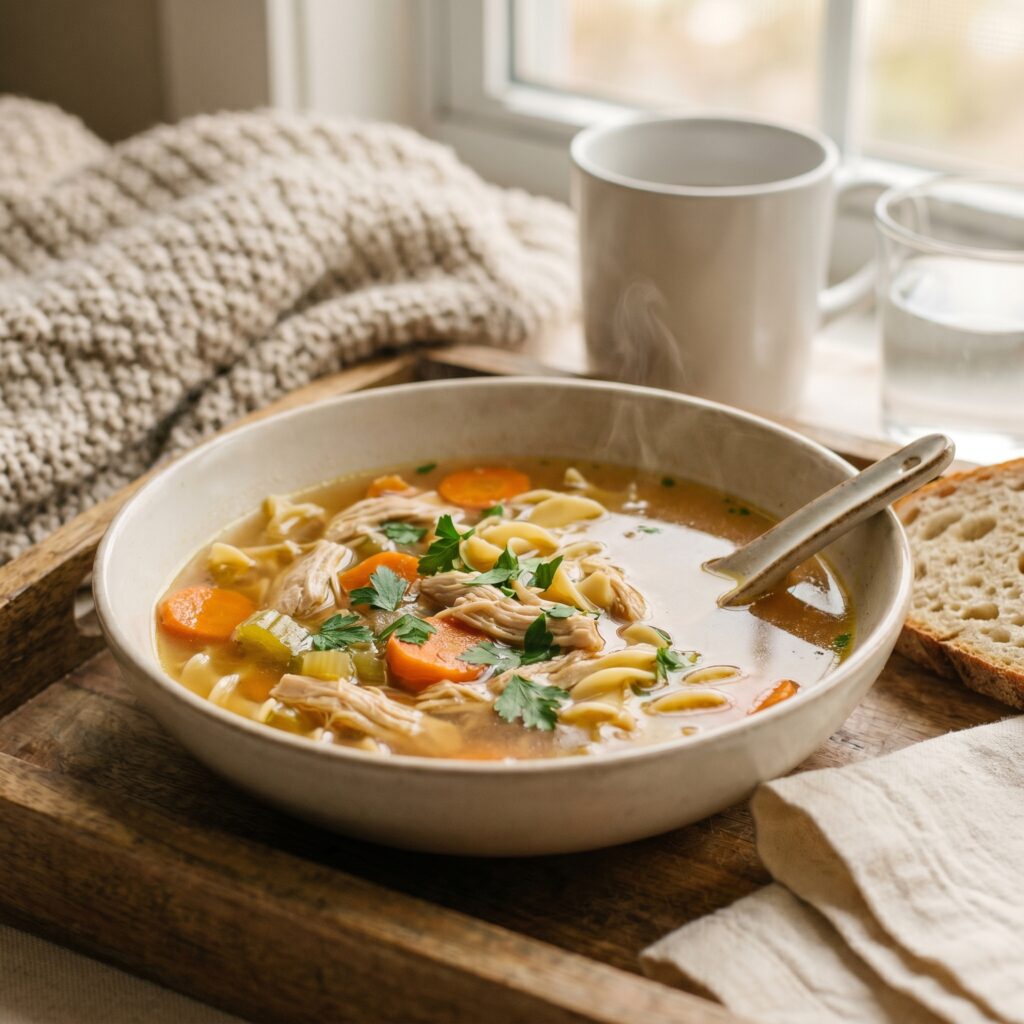
Why this earns Coco’s stamp:
Quick Look
| Recipe | Best Chicken Soup Recipe: Coco Reviewed 12. Three Earned the Stamp. |
Get the next stamp
The pen writes. Your inbox receives.
Coco reviewed 12 chicken soup recipes.
Three earned the Stamp. The winner starts with a whole bird in cold water, simmers at a bare tremor for 2 hours, and adds vegetables only in the last 30 minutes — this sequence extracts the collagen that makes broth gelatinous at room temperature, which is the only real measure of a great soup.
Chicken soup that tastes watery started with hot water. Cover the chicken with cold water and bring it up slowly — the gradual temperature rise pulls proteins and collagen out of the bone in a way that a hot-water start cannot replicate.
Coco reviewed 12 versions of Chicken Soup before issuing this stamp. The sources ranged from professional chef publications to home cook blogs to culinary school curricula. The Chickeeen stamp system does not consider the source’s reputation. It considers whether the method produces the stated result, reproducibly, in a standard home kitchen.
Coco reviewed 12 chicken soup recipes. Three earned the Stamp. The winner starts with a whole bird in cold water, simmers at a bare tremor for 2 hours, and adds vegetables only in the last 30 minutes — this sequence extracts the collagen that makes broth gelatinous at room temperature, which is the only real measure of a great soup.
Cold water start: Cover chicken with cold water, never hot. Slow temperature rise extracts proteins and collagen gradually. Starting with hot water seizes proteins and clouds the broth.
Bare simmer only: 200-205°F — a wobble, not a boil. Vigorous boiling emulsifies fat into the broth and makes it greasy. Skim foam in the first 20 minutes. Set a timer. Vegetables in the last 30 minutes: Vegetables are done in 30 minutes at a simmer. Adding them at the start produces mush with no flavor left. Remove chicken, shred it, return only the meat.
The versions that failed Coco’s review shared a pattern: they prioritized convenience over technique. The most common failure is incorrect timing — instructions that say ‘cook until done’ rather than specifying an internal temperature. The second most common failure is incorrect heat level, which produces either undercooked meat or a burnt exterior with raw interior.
If a recipe for Chicken Soup does not specify an internal temperature target, it is leaving a critical variable to chance. Coco’s stamped version names the temperature and the pull point explicitly.
Chicken Soup comes together in 170 minutes total: 20 minutes of active preparation and 150 minutes of cook time. The recipe serves 6-8. The timing does not change based on your equipment as long as you hit the internal temperature specified in the recipe card above.
The key ingredients are Chicken Soup-specific: 1 whole chicken, 3.5-4 lbs (or 3 lbs bone-in parts), 3 large carrots, chopped, 4 celery stalks, chopped, 1 large onion, quartered, 6 cloves garlic, smashed. Every item on the full list in the recipe card above is there for a specific reason. Coco tested substitutions where they matter and noted which ones hold and which ones change the outcome.
This stamp is for the cook who wants the best Chicken Soup and does not want to experiment with three different versions before finding one that works. Coco has done that part. The recipe card above is the result.
The equipment requirements for Chicken Soup are specific because the technique is specific. You will need Large stockpot, 6-8 quart, Fine-mesh strainer, Ladle, Tongs for removing chicken. The reason these items appear on the list is not because they are fancy — it is because the technique requires precise heat control or temperature measurement that cheaper substitutes cannot reliably provide.
Coco tested Chicken Soup with standard home kitchen equipment, not professional grade. Every item on the list above is available at a mainstream kitchen retailer at a reasonable price point. The stamp does not require a professional kitchen.
Across the 12 recipes Coco reviewed for Chicken Soup, the differences came down to a small number of decisions: heat level at the start versus the end of cooking, the sequence of adding components, and whether rest time was specified and realistic. These are not preference decisions — they have measurable effects on texture and internal temperature distribution.
The versions that did not earn the stamp had one or more of the following issues: timing that assumed commercial-grade heat output, ingredient quantities that changed the technique without acknowledging it, or instructions that skipped a step that appeared optional but was not. Coco notes the specific failure in the stamp summary above.
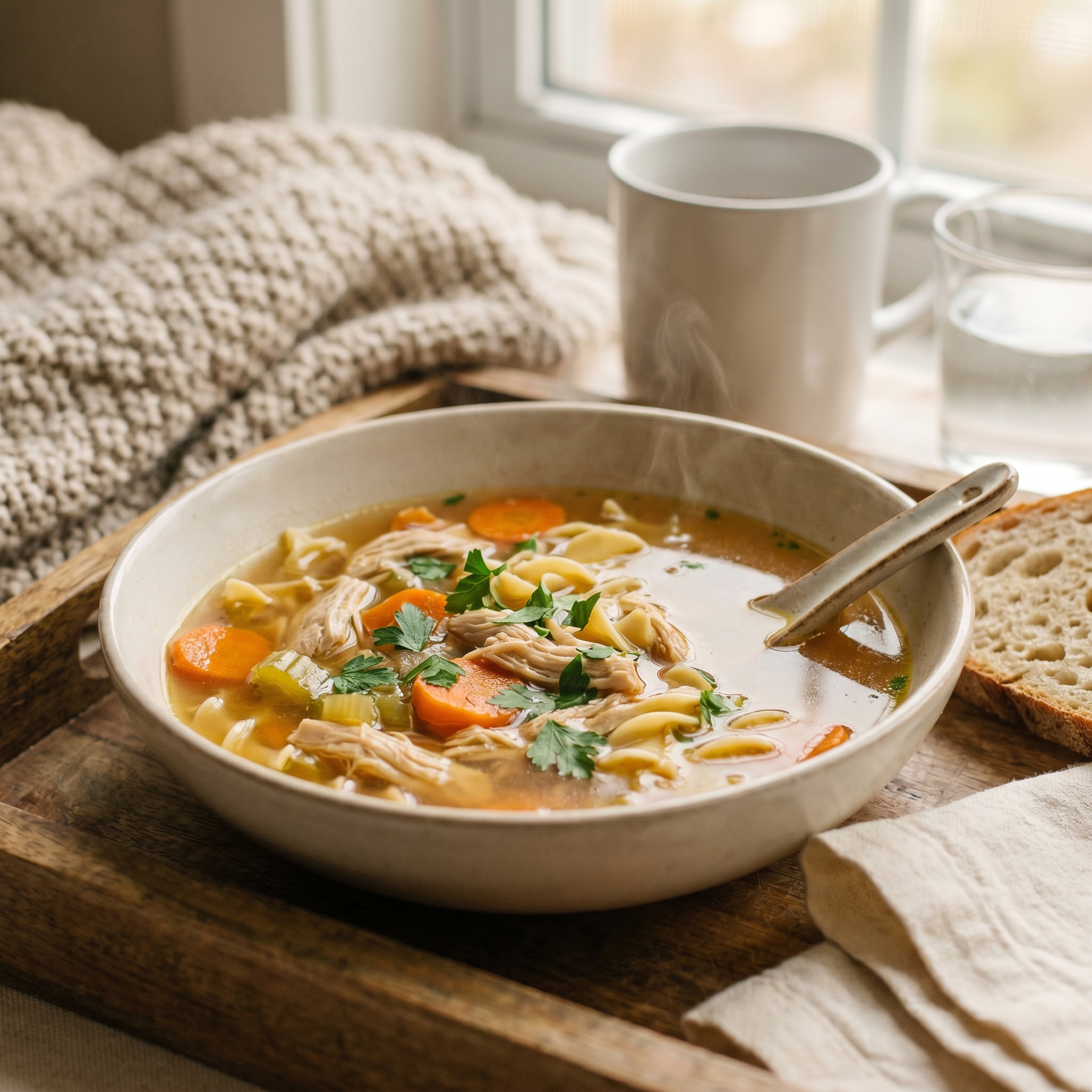
The Chickeeen Bible Standard
Every stamp on this site is measured against the Chickeeen Bible — the definitive standard for chicken cooking.
Coco reviewed 12 versions. This is the one that works — and here’s exactly why.
Cover chicken with cold water, never hot. Slow temperature rise extracts proteins and collagen gradually. Starting with hot water seizes proteins and clouds the broth.
200-205°F — a wobble, not a boil. Vigorous boiling emulsifies fat into the broth and makes it greasy. Skim foam in the first 20 minutes. Set a timer.
Vegetables are done in 30 minutes at a simmer. Adding them at the start produces mush with no flavor left. Remove chicken, shred it, return only the meat.
Whole chicken: 3 lbs bone-in thighs. The collagen from bones is what makes stock rich.
Fresh parsley: omit or use dried (add with other herbs, not at the end).
Refrigerator: 5 days. Freezer: 3 months. Skim the fat after refrigerating overnight for a cleaner broth.
Stock can be made up to 5 days ahead. Add cooked chicken and vegetables day-of for best texture.
Stovetop on medium, covered, for 10 minutes. Do not boil — vegetables become mushy.
The apron Coco actually wears, plus a few favorites — all Amazon Merch, printed on demand. No warehouse, no markup, no leftovers.
Your chicken could be next
148 recipes stamped. Every one judged on the same standard. Yours is next — if you’re ready for a real stamp.
Submit Your Recipe →Chickeeen Bible
Every stamp is judged against the Chickeeen Bible standard. Read the chapter relevant to this recipe for the full science.