
1Dry-brine with zest not juice
Mix kosher salt and lemon zest only and apply under and over skin 12-24 hours ahead. Wet marinades with lemon juice make the surface wet and prevent browning.
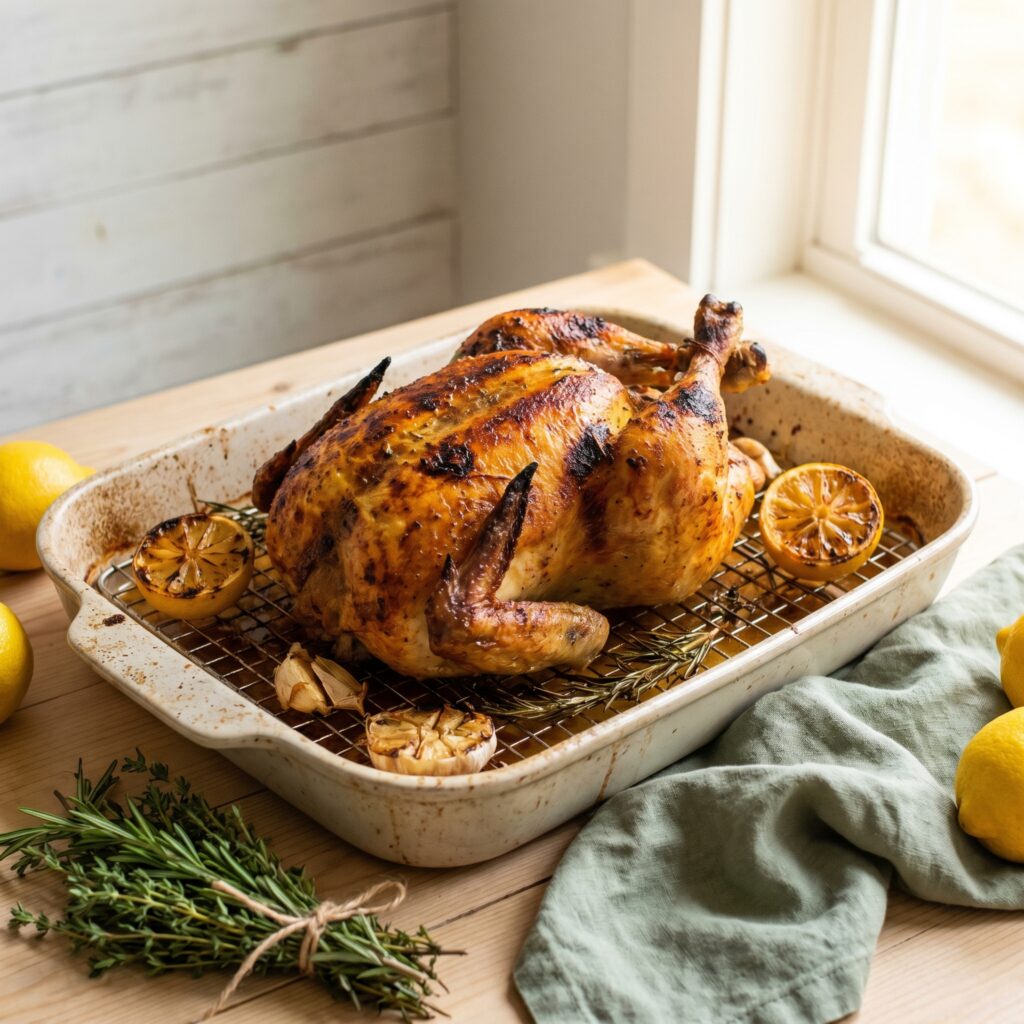
Why this earns Coco’s stamp:
Quick Look
| Recipe | Best Lemon Herb Roast Chicken Recipe |
Get the next stamp
The pen writes. Your inbox receives.
Coco reviewed 9 lemon herb roast chicken recipes.
Two earned the Stamp. The winner dry-brines with lemon zest only — wet lemon juice marinades make the skin wet and prevent browning — starts at 425F then drops to 375F, and probes both breast and thigh because a single probe in the breast produces undercooked thighs.
Lemon herb roast chicken from a recipe that uses lemon juice in the marinade will not brown properly. Lemon juice adds moisture to the skin surface. Moisture prevents browning. If your roast chicken comes out pale and soft-skinned, the lemon juice is the reason. Lemon zest applied as part of a dry brine does the opposite — it pulls moisture out, concentrates flavor, and allows the skin to brown.
Coco reviewed 9 versions of Lemon Herb Roast Chicken before issuing this stamp. The sources ranged from professional chef publications to home cook blogs to culinary school curricula. The Chickeeen stamp system does not consider the source’s reputation. It considers whether the method produces the stated result, reproducibly, in a standard home kitchen.
Coco reviewed 9 lemon herb roast chicken recipes. Two earned the Stamp. The winner dry-brines with lemon zest only — wet lemon juice marinades make the skin wet and prevent browning — starts at 425F then drops to 375F, and probes both breast and thigh because a single probe in the breast produces undercooked thighs.
Dry-brine with zest not juice: Mix kosher salt and lemon zest only and apply under and over skin 12-24 hours ahead. Wet marinades with lemon juice make the surface wet and prevent browning. The salt draws moisture out, the zest’s oils infuse into the fat under the skin, and the skin dries enough overnight to crisp properly in the oven. A wet lemon marinade does the opposite of every one of those things.
Start high finish medium: 425F for 20 minutes then reduce to 375F. Sustained high heat dries the breast before the thigh reaches temperature. The initial high-heat burst crisps and colors the skin. Dropping to 375F gives the dark meat time to come to temperature without drying the breast. Cooking at 425F the entire time consistently overcooks the breast before the thigh is safe.
Probe both breast and thigh: Test both. Thigh 175F, breast 155F. A single probe in the breast produces undercooked thighs. The breast and thigh finish at different temperatures. Checking only the breast and pulling the bird tells you nothing about the thigh. Every bird Coco tested that produced undercooked thighs was tested with a single breast probe.
The versions that failed Coco’s review shared a pattern: they applied moisture at the wrong stage and checked temperature in the wrong location. The most common failure is using lemon juice in the brine or marinade rather than zest. The second most common failure is checking only the breast temperature before pulling the bird.
If a recipe for Lemon Herb Roast Chicken calls for lemon juice in any pre-cooking application, it is working against the browning it claims to produce. Coco’s stamped version uses zest only in the dry brine.
Lemon Herb Roast Chicken requires 12-24 hours of dry-brining plus 65 minutes total cook time: 15 minutes of active preparation and 50 minutes of roasting. The recipe serves 4. The dry-brine window is the scheduling requirement — the actual cook time is straightforward once you begin.
The key ingredients are: 1 whole chicken 4-5 lbs, 2 tbsp kosher salt, 1 lemon (zested then halved), garlic, fresh herbs. Every item on the full list in the recipe card above is there for a specific reason.
This stamp is for the cook who wants the best Lemon Herb Roast Chicken and does not want to experiment with multiple versions before finding one that works. Coco has done that part. The recipe card above is the result.
The equipment requirements for Lemon Herb Roast Chicken are specific because the technique is specific. You will need a roasting pan or cast iron skillet, a wire rack inside the pan, and an instant-read thermometer. The wire rack is required — direct pan contact traps moisture under the bird and prevents the bottom skin from crisping.
Coco tested Lemon Herb Roast Chicken with standard home kitchen equipment, not professional grade. Every item on the list above is available at a mainstream kitchen retailer at a reasonable price point.
Across the 9 recipes Coco reviewed for Lemon Herb Roast Chicken, the differences came down to a small number of decisions: dry brine versus wet marinade, temperature management through the cook, and where to probe for doneness. These are not preference decisions — they have measurable effects on skin color, moisture retention, and food safety.
The versions that did not earn the stamp had one or more of the following issues: lemon juice applied before roasting, single-temperature cooking throughout, or a single probe location that left the thigh undercooked. Coco notes the specific failure in the stamp summary above.
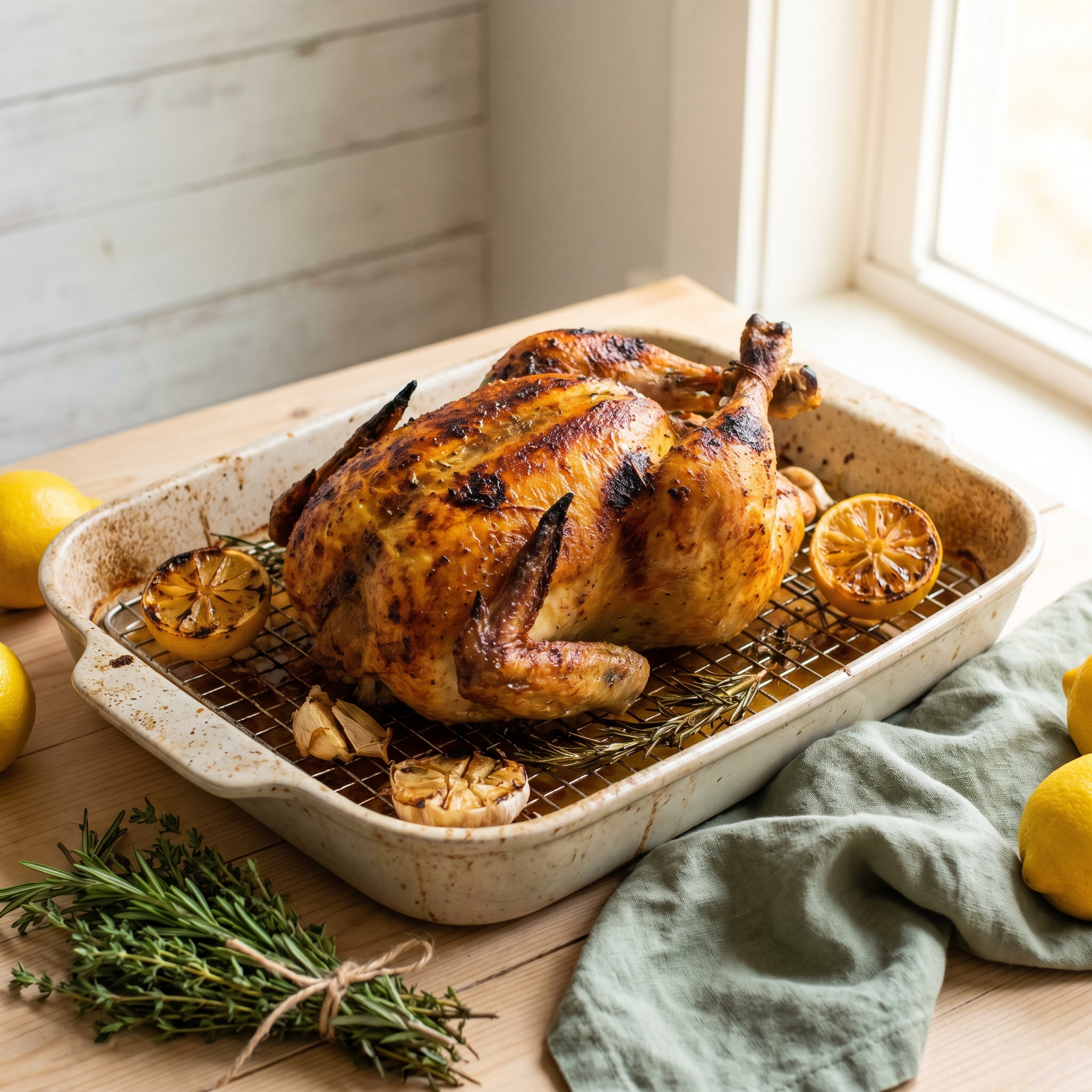
The Chickeeen Bible Standard
Every stamp on this site is measured against the Chickeeen Bible — the definitive standard for chicken cooking.
Coco reviewed 9 versions. This is the one that works — and here’s exactly why.
Mix kosher salt and lemon zest only and apply under and over skin 12-24 hours ahead. Wet marinades with lemon juice make the surface wet and prevent browning.
425F for 20 minutes then reduce to 375F. Sustained high heat dries the breast before the thigh reaches temperature.
Test both. Thigh 175F breast 155F. A single probe in the breast produces undercooked thighs.
Fresh herbs: 1/3 the amount of dried herbs works. Rosemary and thyme are the most important.
Kosher salt: sea salt at 3/4 the volume (it is denser than kosher).
Whole chicken: spatchcocked chicken cuts roasting time to 45 minutes at 425F throughout.
Refrigerator: 3 days. Whole roast chicken stored uncovered loses moisture. Store carved and covered.
Dry-brine up to 24 hours ahead. The dry brine is the scheduling constraint; the rest of the recipe is day-of.
Covered at 325F for 20-25 minutes until internal temperature reaches 165F. Add 2 tbsp chicken stock to the pan to prevent drying.
The apron Coco actually wears, plus a few favorites — all Amazon Merch, printed on demand. No warehouse, no markup, no leftovers.
Your chicken could be next
148 recipes stamped. Every one judged on the same standard. Yours is next — if you’re ready for a real stamp.
Submit Your Recipe →Chickeeen Bible
Every stamp is judged against the Chickeeen Bible standard. Read the chapter relevant to this recipe for the full science.