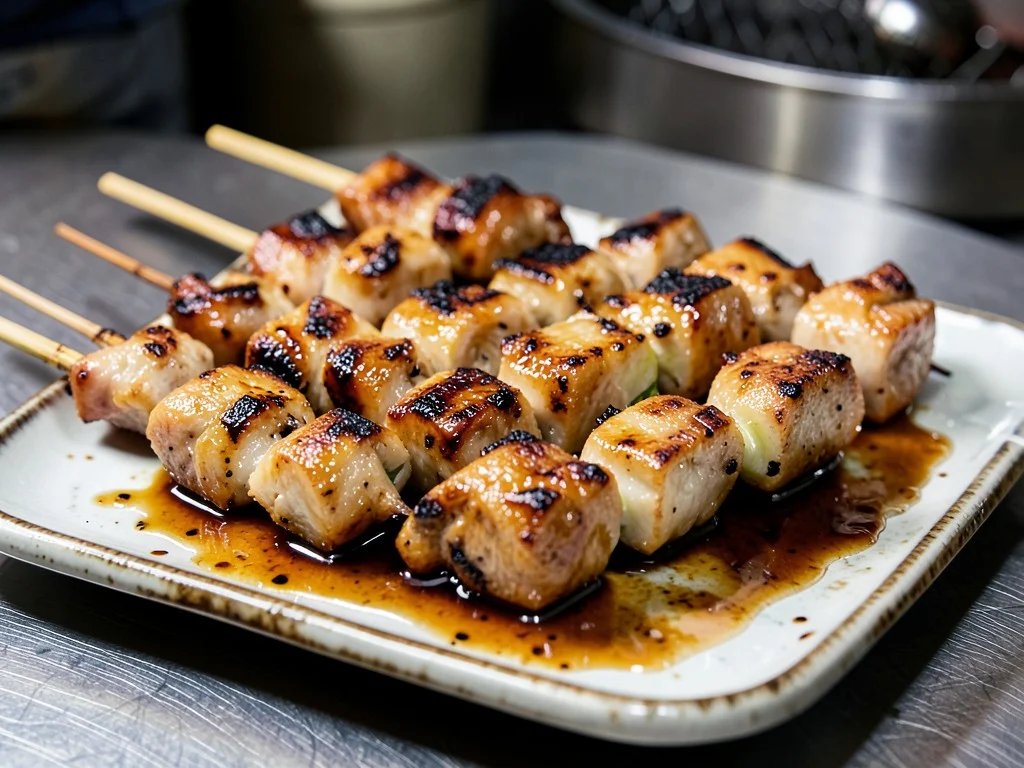
Glazed Japanese Yakitori Chicken Thigh Skewers
Chef & Safety Quick Answer: Yakitori skewers chicken thigh cubes and Tokyo negi scallions over high heat, brushing repeatedly with tare sauce (reduced soy, mirin, ...

Cook Glazed Japanese Yakitori Chicken Thigh Skewers for 12 minutes until the internal temperature reaches 175°F–180°F (Safe at 165°F). Rest for 5–10 Mins before slicing so juices redistribute and carryover heat reaches full USDA FSIS food safety standards.
Quick Look
| Recipe | Glazed Japanese Yakitori Chicken Thigh Skewers |
Get new recipes
Got chicken? Never wonder what’s for dinner again.
Yakitori skewers chicken thigh cubes and Tokyo negi scallions over high heat, brushing repeatedly with tare sauce (reduced soy, mirin, sake, and brown sugar). The sugars caramelize directly against grill grates, creating smoky umami crust.
Recipe Overview & Cooking Metrics
| Prep Time | 20 minutes | Cook Time | 12 minutes |
| Total Time | 37 minutes | Servings | 4 servings |
| Calories / Serving | 340 kcal | Protein / Serving | 32g |
| Cuisine | Japanese Izakaya | Category | Grilled |
Equipment Needed
- Indoor cast iron grill pan or outdoor charcoal grill
- Small saucepan for tare sauce reduction
- Pastry basting brush
- Kitchen tongs
- Digital probe meat thermometer
Ingredients
- 1.5 pounds boneless skinless chicken thighs, cut into 1-inch cubes
- 2 large bunches thick Tokyo scallions (negi) or large green onions, cut into 1-inch lengths
- 10 bamboo skewers (8-inch), soaked in water for 30 minutes
- 1/2 cup low-sodium soy sauce
- 1/2 cup mirin (sweet Japanese rice wine)
- 1/4 cup sake (Japanese cooking wine)
- 2 tablespoons brown sugar
- 1 clove garlic, lightly smashed
- 1 coin fresh ginger
- Shichimi togarashi (Japanese seven-spice blend) for finishing
Step-by-Step Cooking Instructions
- Make authentic tare glaze: in a small saucepan, combine soy sauce, mirin, sake, brown sugar, smashed garlic, and ginger. Simmer over medium heat for 10 minutes until reduced by half into a glossy glaze that coats back of a spoon. Discard garlic and ginger.
- Thread soaked bamboo skewers alternating between chicken thigh cubes and 1-inch scallion pieces (approx 4 pieces chicken and 3 pieces scallion per skewer).
- Preheat a cast iron grill pan or charcoal grill to medium-high heat (approx 400°F / 204°C). Lightly oil grates.
- Place skewers on hot grill grates. Cook undisturbed for 4 minutes until bottom sides show deep grill char marks.
- Flip skewers and cook second side for 3 minutes.
- Using a pastry brush, generously baste skewers with warm tare glaze on all sides. Flip and cook for 1 minute, letting sugars caramelize slightly without burning.
- Apply a second coat of tare glaze, flip, and cook for 1 final minute until chicken registers 175°F (79°C) for tender dark meat.
- Transfer skewers to a serving plate, brush with remaining tare glaze, and dust with shichimi togarashi spice.
Explore Related Global Chicken Masterpieces
Expand your culinary horizons with these double-tested recipes from our Global Chicken Recipes Hub:
- Crispy Korean Fried Chicken (Yangnyeom): Authentic double-fried crunch with sticky chili glaze.
- Crispy Japanese Chicken Katsu with Curry: Flaky panko cutlet with savory brown vegetable curry.
- Authentic Thai Green Chicken Curry: Coconut cream-cracked aromatic curry with Thai basil.
- Master Chicken Internal Temperature Guide: USDA safety guidelines across all cuts.
Frequently Asked Questions
Soaking bamboo skewers in water for 30 minutes prevents them from scorching or catching fire over direct high-heat grill flames.
Yes. Place skewers on a foil-lined wire baking sheet 4 inches below broiler on High. Broil for 4 minutes per side, then baste with tare sauce twice, broiling for 1 minute per side.
Shichimi togarashi is a traditional Japanese spice blend containing chili flakes, orange peel, sesame seeds, ginger, seaweed, and poppy seeds that adds bright citrus warmth to grilled poultry.
Method
The key details are in the summary above.
Essential Benchmarks for Perfect Poultry
Every recipe on Chickeeen relies on these four core culinary physics principles. Use our tested reference cards before you start cooking.
Safe Pull Temp
Exact target internal pull temperatures by cut to lock in maximum moisture.
Resting Time Formula
Retain up to 40% more natural juices with proper carryover heat resting.
Salt Ratio & Timing
Dry brining science and salt penetration window for deeply seasoned poultry.
Crispy Skin Science
The baking powder secret, high heat Maillard reaction, and fat rendering rules.
Nutrition per serving
Glazed Japanese Yakitori Chicken Thigh Skewers, your questions.
What makes Glazed Japanese Yakitori Chicken Thigh Skewers worth making?
How long does Glazed Japanese Yakitori Chicken Thigh Skewers take to make?
What equipment do you need for Glazed Japanese Yakitori Chicken Thigh Skewers?
What is the key technique for Glazed Japanese Yakitori Chicken Thigh Skewers?
Staring Into the Fridge with Raw Chicken?
Select your cut (breasts, thighs, ground) and available pantry staples (rice, pasta, potatoes) in our interactive decider tool. Get instant tested dinners in 10 seconds.


Technique Guides
Related Techniques
- Chicken Internal Temperature Pull temps by cut
- How to Brine Chicken Wet & dry brine times
- Crispy Chicken Skin Maillard at 280°F+
- How Long to Rest Chicken Up to 40% more juice
- How to Season Chicken 45 min before cooking
- Chicken Cuts Guide Breast vs thigh vs drum
- How to Spatchcock a Chicken 30% faster, 100% crispy skin