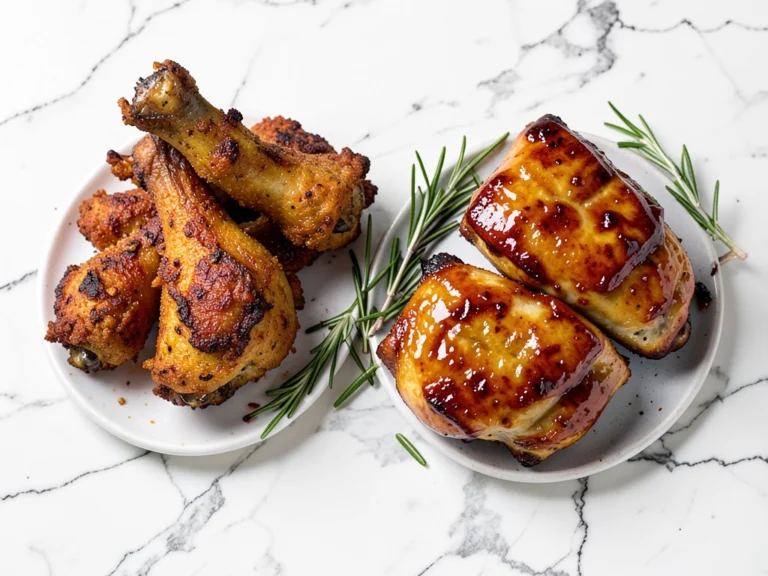
1Trim and Season
Pat both chicken breasts and thighs dry with paper towels. Rub each cut evenly with olive oil, kosher salt, black pepper, garlic powder, and smoked paprika.
Chicken breasts win decisively for lean macronutrients and maximum protein per calorie, while chicken thighs win decisively for juicy richness, culinary forgiveness, and sauce absorption.
Cook Chicken Breast vs Chicken Thighs Guide for 25 minutes until the internal temperature reaches 160°F–162°F (Rest to 165°F). Rest for 5–10 Mins before slicing so juices redistribute and carryover heat reaches full USDA FSIS food safety standards.
Quick Look
| Recipe | Chicken Breast vs Chicken Thighs (Nutrition, Cooking Times and Pull Temp Guide) |
Get new recipes
Got chicken? Never wonder what’s for dinner again.
Originally published
Chicken breasts win decisively for lean macronutrients and maximum protein per calorie, while chicken thighs win decisively for juicy richness, culinary forgiveness, and sauce absorption.
Deciding between chicken breast and chicken thighs comes down to texture, culinary margin of error, and nutritional goals. While both cuts deliver versatile weeknight dinners, their distinct muscle structures demand completely different cooking times and internal pull temperatures.
Chicken breasts consist of white pectoral muscle tissue. These fast twitch muscle fibers contain very little myoglobin and almost zero intermuscular fat. When breast meat heats past 160°F, muscle proteins contract tightly and squeeze out intracellular moisture. Chicken thighs consist of dark active leg muscles loaded with myoglobin and rich collagen networks. Rather than drying out at higher temperatures, dark meat thighs become increasingly tender between 175°F and 185°F as collagen hydrolyzes into succulent gelatin.
Here is how 100 grams of cooked, skinless chicken breast compares to 100 grams of cooked, skinless chicken thigh:
Use this timetable to calibrate your cooking duration depending on the appliance you choose:
Here is what you need to cook both cuts to perfection:
Boneless Chicken Breasts: Look for smooth, pale pink breasts without woody white striations. Trim any excess tendon cartilage.
Boneless Chicken Thighs: Trim large excess fat pockets along the seam, but leave the thin marble fat intact for basting.
Extra Virgin Olive Oil: Helps seasonings adhere and distributes heat evenly across the meat surface.
Smoked Paprika and Garlic: Adds savory depth and builds a golden crust in hot pans or ovens.
Pair seared chicken breasts with light, bright accompaniments like garlic lemon asparagus, quinoa tabbouleh, and crisp arugula salad. Complement rich chicken thighs with hearty roasted baby potatoes, buttered noodles, or creamy mashed cauliflower.
Refrigerate cooked chicken breasts and thighs in separate airtight glass containers for up to 4 days. Warm chicken breasts gently in a covered skillet with 2 tablespoons of chicken broth over low heat for 4 minutes to prevent drying out. Reheat thighs in an oven at 350°F for 8 minutes or in an air fryer at 360°F for 3 minutes to restore crisp edges.
Chicken breast holds the advantage for strict calorie counting. A 100 gram portion of skinless chicken breast delivers 165 calories and 31 grams of protein, compared to 209 calories and 26 grams of protein for skinless thighs. That means breast gives you more protein per calorie, which helps keep you full during a calorie deficit. However, chicken thighs offer higher satiety from healthy monounsaturated fats, preventing hunger spikes later in the evening.
Chicken thighs come from the active leg muscles of the bird. These muscles contain higher amounts of intramuscular fat and connective collagen fibers, which supply sustained energy for walking. Even with the visible fat trimmed away, dark meat contains roughly 10.9 grams of fat per 100 grams, compared to just 3.6 grams in lean white breast meat.
Chicken thighs win decisively on essential minerals. Because thighs are working dark meat muscles packed with oxygen-storing myoglobin, they deliver 1.3 milligrams of iron and 2.1 milligrams of zinc per 100 grams. That is more than double the zinc found in chicken breast (1.0 milligram) and 30 percent more iron.
Yes, you can swap them in almost every savory dish, but you need to adjust your cooking time and temperature. Boneless thighs handle high heat and prolonged simmering without drying out, while breasts require quick cooking and an immediate pull at 160°F to 162°F. When swapping thighs into a breast recipe, give them an extra 3 to 5 minutes so the internal temperature reaches at least 175°F to melt the connective tissue.
Sources and Food Safety References
Explore More from the Test Kitchen
Mastering Chicken Breast vs Chicken Thighs Guide comes down to precise temperature control and key technique cues.
Pat both chicken breasts and thighs dry with paper towels. Rub each cut evenly with olive oil, kosher salt, black pepper, garlic powder, and smoked paprika.
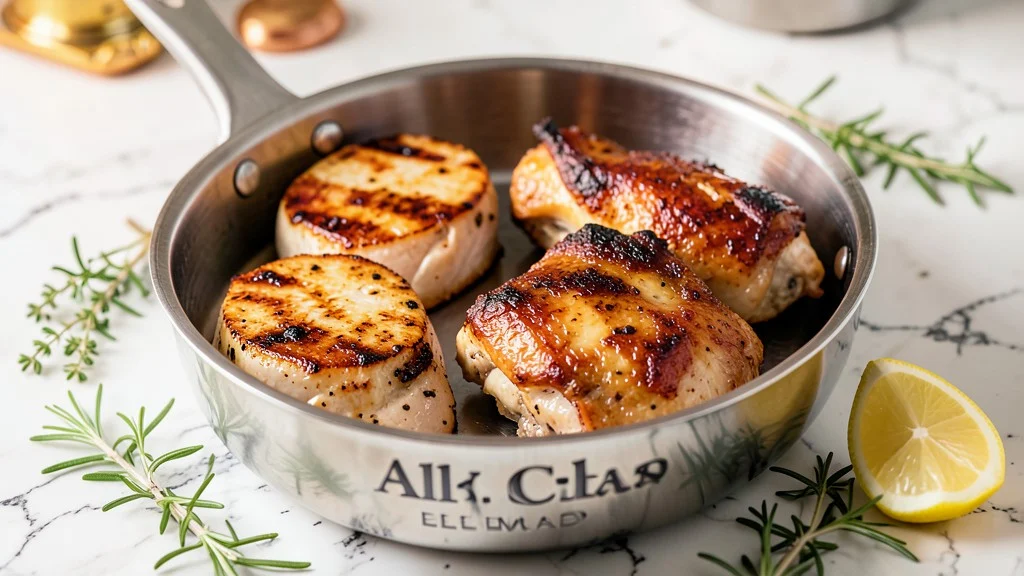
For pan searing or baking at 400°F (200°C), place chicken breasts on one side and chicken thighs on the other side of a heavy skillet or rimmed baking sheet.
Cook chicken breasts for 16 to 18 minutes until internal temperature hits 160°F (71°C) at the thickest part. Transfer breasts immediately to a warm plate and rest 5 minutes to allow carryover heat to reach 165°F.
Continue cooking chicken thighs for an additional 6 to 8 minutes until internal temperature registers 175°F to 180°F (79°C to 82°C). Rest 5 minutes before slicing across the grain.
Appears in:
Every recipe on Chickeeen relies on these four core culinary physics principles. Use our tested reference cards before you start cooking.
Exact target internal pull temperatures by cut to lock in maximum moisture.
Retain up to 40% more natural juices with proper carryover heat resting.
Dry brining science and salt penetration window for deeply seasoned poultry.
The baking powder secret, high heat Maillard reaction, and fat rendering rules.
You can swap boneless cuts for bone in cuts, adding 12 to 15 minutes of roasting time at 400°F.
Refrigerate cooked chicken breasts and thighs in separate airtight glass containers for up to 4 days.
Warm chicken breasts gently in a covered skillet with 2 tablespoons of chicken broth over low heat for 4 minutes to prevent drying out. Reheat thighs in an oven at 350°F for 8 minutes or in an air fryer at 360°F for 3 minutes.
Select your cut (breasts, thighs, ground) and available pantry staples (rice, pasta, potatoes) in our interactive decider tool. Get instant tested dinners in 10 seconds.
Technique Guides