Why Chicken Breast Comes Out Dry
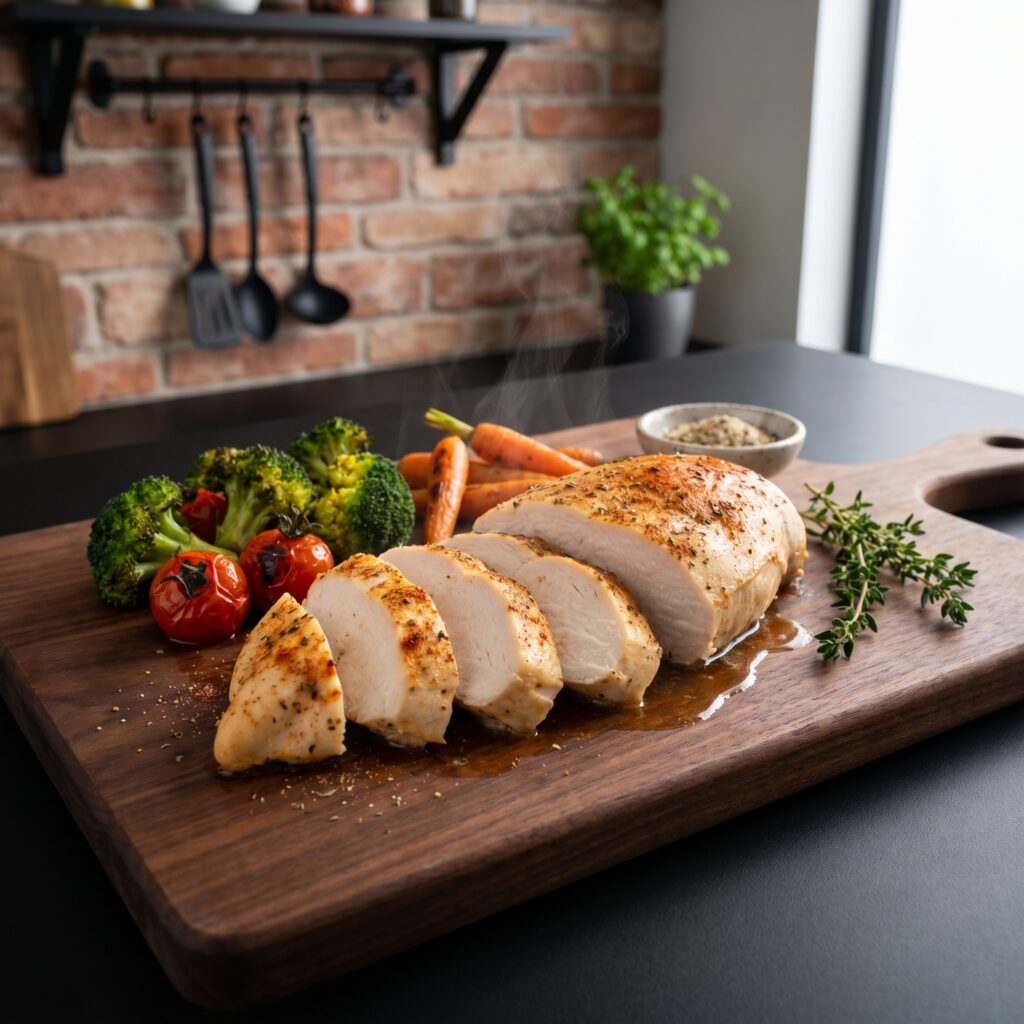
Almost always one of three things: it was cooked past 165°F, it wasn't rested 5 minutes before cutting, or it was uneven thickness so the thin end overcooked before the thick end finished.
| Cause 1 | Cooked past 165°F — check with a thermometer, not the clock |
| Cause 2 | Cut into immediately — rest 5 min, juices redistribute |
| Cause 3 | Uneven thickness — pound to an even 3/4" before cooking |
Breast meat has almost no fat to buffer overcooking the way thigh meat does — a few minutes past 165°F is the difference between juicy and dry, with no margin for error. That's the structural reason breast is harder to get right than thighs, not a flaw in any specific recipe.
Why thighs instead
If dryness is the recurring problem, the simplest fix is switching cuts — thighs have enough fat to stay forgiving through a few extra minutes of overcooking, which breast never forgives.
- Honey Garlic Chicken Thighs
- Baked Bone-In Chicken Thighs
- Crispy Air Fryer Chicken Thighs
- Braised Chicken Thighs in White Wine
- All thigh recipes →
Quick questions
What internal temperature should chicken breast be?
165°F at the thickest part, checked with an instant-read thermometer. Pulling it a couple degrees early and letting carryover heat finish the job during the rest also works.
Does brining help with dry chicken breast?
Yes — a 30-minute salt water brine helps the meat hold onto more moisture through cooking, though it doesn't fix overcooking. Technique still matters more than brining alone.
Why do restaurants' chicken breast taste juicier?
Usually a combination of brining, precise temperature control, and resting — not a different cut of meat.